
What Is SEO and Why Should You Care? A Practical 2026 Guide
Table of Contents
What is e-commerce SEO today?
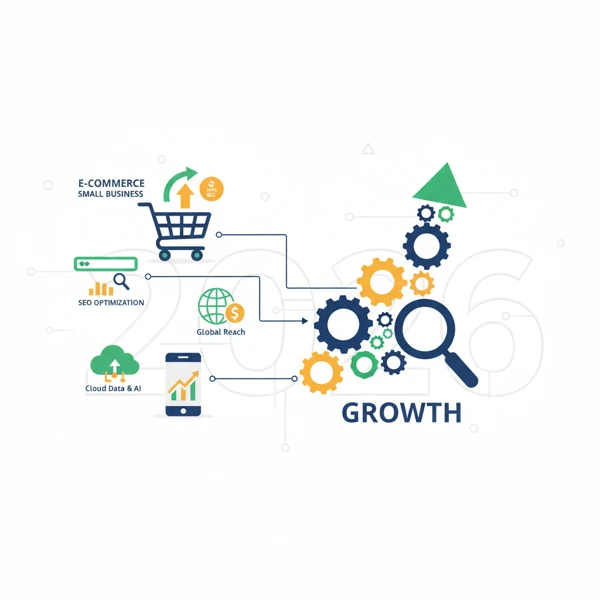
Running an e-commerce store in 2026 feels like a constant sprint, doesn't it? You've got amazing products, a well-designed site, but if customers can't find you, it's all for naught. This is where e-commerce SEO strategies 2026 come into play, and frankly, it's more critical than ever.
SEO, or Search Engine Optimization, is about making your online store visible to search engines like Google. For small business owners, boutique owners, and e-commerce entrepreneurs, it's the difference between thriving and just existing. In an increasingly noisy digital world, getting discovered organically is gold. But what exactly does that mean for you today?
Why search visibility matters now
The digital landscape is changing at warp speed. Customers aren't just browsing; they're actively searching for solutions, products, and information. If you're not showing up when they type those keywords, your competitors certainly will.
Consider these stark realities:
- Up to 60% of searches are predicted to become "zero-click" by 2027, meaning users find their answer directly on the search results page without clicking through to a website, as reported by BigCommerce.com.au.
- Approximately 75% of users never scroll past the first page of search results, according to BigCommerce.com.au. If you're not on page one, you're practically invisible.
A strong SEO foundation drives qualified traffic, people who are already looking for what you offer. It also builds trust and authority. When your site consistently appears at the top, it signals to users that you're a reputable source. Manual optimization of countless product titles, descriptions, and categories can be a huge bottleneck, a frustration many store owners know too well.

The rise of AI in search
The biggest game-changer is the pervasive rise of AI in search itself. AI Overviews are becoming prevalent, acting as an upstream visibility filter. This means search engines are using sophisticated AI to directly answer user queries, often pulling information from various sources to synthesize a response without sending the user to a single website.
For you, this translates into an even greater need for structured, keyword-rich content that clearly answers user intent. Your content needs to be so well-organized and authoritative that it gets chosen by the AI to be part of its summary. This evolving landscape isn't a threat; it's an opportunity for those willing to adapt and integrate smart, automated solutions.
Pro-Tip: Structure beats keyword lists! In the age of AI Overviews, simply stuffing keywords won't cut it. Focus on creating well-structured content that directly answers questions and provides comprehensive information. This makes your content digestible and extractable for AI.
Common questions about SEO basics
Many e-commerce entrepreneurs initially ask, "What exactly is SEO, and why should I care?" Here's the short version:
- SEO is fundamentally about discoverability. It's how your shop appears when someone searches for "handmade jewelry," "eco-friendly dog toys," or "vintage clothing boutique."
- It directly impacts your sales and growth by bringing in customers who are actively looking to buy.
- A consistent SEO strategy reduces your reliance on paid ads, leading to a better return on investment over time.
- It helps you build brand authority and trustworthiness in your niche.
Ignoring SEO in 2026 is like opening a beautiful store in a hidden alleyway – no one will know you're there. Proactive optimization isn't just crucial; it's a non-negotiable part of any successful e-commerce entrepreneur marketing strategy.
Automating product optimization for growth

For many small business owners, the thought of optimizing every product title and description is exhausting. You love your products, but the endless cycle of crafting SEO-friendly titles feels like a chore, and you're never quite sure if you're doing it right. This is precisely where modern AI-driven solutions shine, allowing you to automate product SEO and focus on what you do best.
Leveraging AI tools isn't just about saving time; it's about making smarter, data-driven decisions that translate into higher rankings and increased sales. Let's look at how this works in practice.
AI-powered product title & description optimization
Imagine having an expert SEO analyst working on every single product, simultaneously. That's essentially what AI tools offer. They can analyze vast amounts of search data, identify high-performing keywords, and even study competitor strategies to generate compelling, keyword-rich product titles and descriptions. This directly tackles the "takes forever, never sure if doing it right" problem.
AI can ensure your product titles aren't just descriptive but also optimized for higher click-through rates (CTR) and search rankings. It creates unique, engaging copy for descriptions that resonate with your ideal customer profile (ICP), all while maintaining brand consistency. This is about making sure every product page is a magnet for relevant traffic.

| Feature | Manual Optimization | AI Product Optimization |
|---|---|---|
| Keyword Research | Time-consuming, limited scope. | Automated, identifies long-tail keywords and trends at scale. |
| Title & Description Generation | Tedious, inconsistent, prone to writer's block. | Rapid, keyword-rich, consistent brand voice, iterative. |
| Structured Data (Schema) | Requires technical expertise, manual implementation. | Automated generation, ensures accuracy and rich snippets. |
| Scaling | Extremely difficult for large catalogs. | Effortless for thousands of products, constant optimization. |
| Cost-Effectiveness | High agency fees or significant time investment. | Affordable, enterprise-grade AI for small businesses. |
Creating rich product pages with AI
Beyond just titles and descriptions, AI can generate detailed, engaging product pages that are optimized for both search engines and users. This includes crafting comprehensive specifications, anticipatory FAQs, and compelling long-form copy that answers every potential customer question. Remember, Google is looking for content that genuinely satisfies user intent.
By automating the creation of these "rich product pages," you can ensure a consistent, high-quality experience across your entire catalog. This not only boosts your SEO but also improves conversion rates by providing customers with all the information they need to make a purchase, whether it's for fashion, accessories, or home goods.
Did You Know? Google is constantly updating its requirements for product feeds. For instance, by 2026, it will enforce more detailed and standardized product attributes, making fields like gender, age_group, and material mandatory for fashion categories. More granular product_type structures will also be required to ensure proper ad targeting and user matching, according to Google Merchant Center announcements. AI tools can help you stay compliant.
Technical SEO for product listings
Let's get a little technical for a moment, as it's crucial for managing a growing product catalog. Structured data, specifically Schema markup for products, tells search engines exactly what your product is, its price, availability,

and other key details. This helps search engines display rich results, like star ratings and prices directly in search, significantly boosting click-through rates. Automating this process ensures accuracy and consistency across all your listings, making it easier for search engines to understand and rank your products effectively.
Supercharging content creation for e-commerce

Content is the backbone of any effective SEO strategy. For e-commerce businesses, this means not just product descriptions but also blog posts, buying guides, landing pages, and more. The challenge? Generating high-quality, relevant content consistently can be a massive drain on resources. Fortunately, AI is revolutionizing content creation, making it faster, more efficient, and more effective than ever before.
AI-assisted blog and guide creation
Struggling to keep your blog updated with fresh, engaging content that attracts and converts? AI tools can help you overcome writer's block and accelerate your content production pipeline. They can assist in:
- Brainstorming topics based on trending keywords and competitor analysis.
- Generating outlines and initial drafts for blog posts, articles, and buying guides.
- Optimizing existing content for better search engine performance and user engagement.
- Ensuring content accuracy by cross-referencing information with reliable sources.
The key is to use AI as a co-pilot, not an autopilot. While AI can draft content rapidly, human oversight is crucial for maintaining brand voice, ensuring factual accuracy, and adding unique insights. As Tenet reports, 56% of marketers are already using generative AI in their SEO workflows, demonstrating its growing importance.
AI in SEO Statistics: The integration of AI into SEO is rapidly accelerating. With AI Overviews appearing in up to 47% of Google search results (Source: wearetenet.com), businesses need to adapt their content strategies to be AI-friendly and provide structured, easily digestible information.
Leveraging AI for persuasive copywriting
Beyond SEO optimization, AI can significantly enhance the persuasive power of your marketing copy. It can help you:
- Analyze customer sentiment and tailor language to resonate with your target audience.
- Craft compelling headlines and calls-to-action (CTAs) that drive conversions.
- Personalize marketing messages at scale for email campaigns, ad copy, and social media posts.
- A/B test different copy variations quickly to identify what performs best.
By using AI to refine your messaging, you can create marketing materials that not only rank well but also connect with customers on a deeper level, driving engagement and sales.

Staying ahead of the curve with AI trends
The AI landscape is constantly evolving. As of 2026, major shifts include:
- More sophisticated AI models capable of understanding nuanced queries and generating highly relevant, creative content.
- Increased integration of AI into all aspects of the customer journey, from initial search to post-purchase support.
- Ethical AI considerations becoming paramount, requiring transparency and responsible use of AI in marketing and content creation.
Businesses that proactively embrace these AI trends and integrate them into their SEO and content strategies will be best positioned for success in the coming years. This means staying informed, experimenting with new tools, and adapting your approach as the technology matures.
Frequently Asked Questions
In 2026, e-commerce SEO is about optimizing your online store to be highly visible in search engine results pages (SERPs). This includes technical optimization, on-page SEO for product pages and content, and understanding how AI Overviews and personalized search results impact user journeys. It focuses on driving qualified organic traffic that leads to sales.
AI significantly impacts e-commerce SEO by influencing search result formats (like AI Overviews), personalizing user experiences, and automating optimization tasks. It requires content to be more structured and authoritative to be featured in AI-generated answers. AI tools also help in generating product descriptions, blog posts, and analyzing data more efficiently.
Content is crucial because it attracts users searching for solutions and products, builds authority, and provides valuable information that search engines favor. For e-commerce, this includes product descriptions, blog posts, guides, and more. High-quality, SEO-optimized content helps improve rankings, drives organic traffic, and educates potential customers, leading to conversions.
Zero-click searches occur when a user finds the information they need directly on the search engine results page (SERP) without needing to click through to any website. This can include featured snippets, knowledge panels, or AI Overviews. While this presents challenges for website traffic, it underscores the importance of optimizing content to be easily understood and utilized by search engines.
